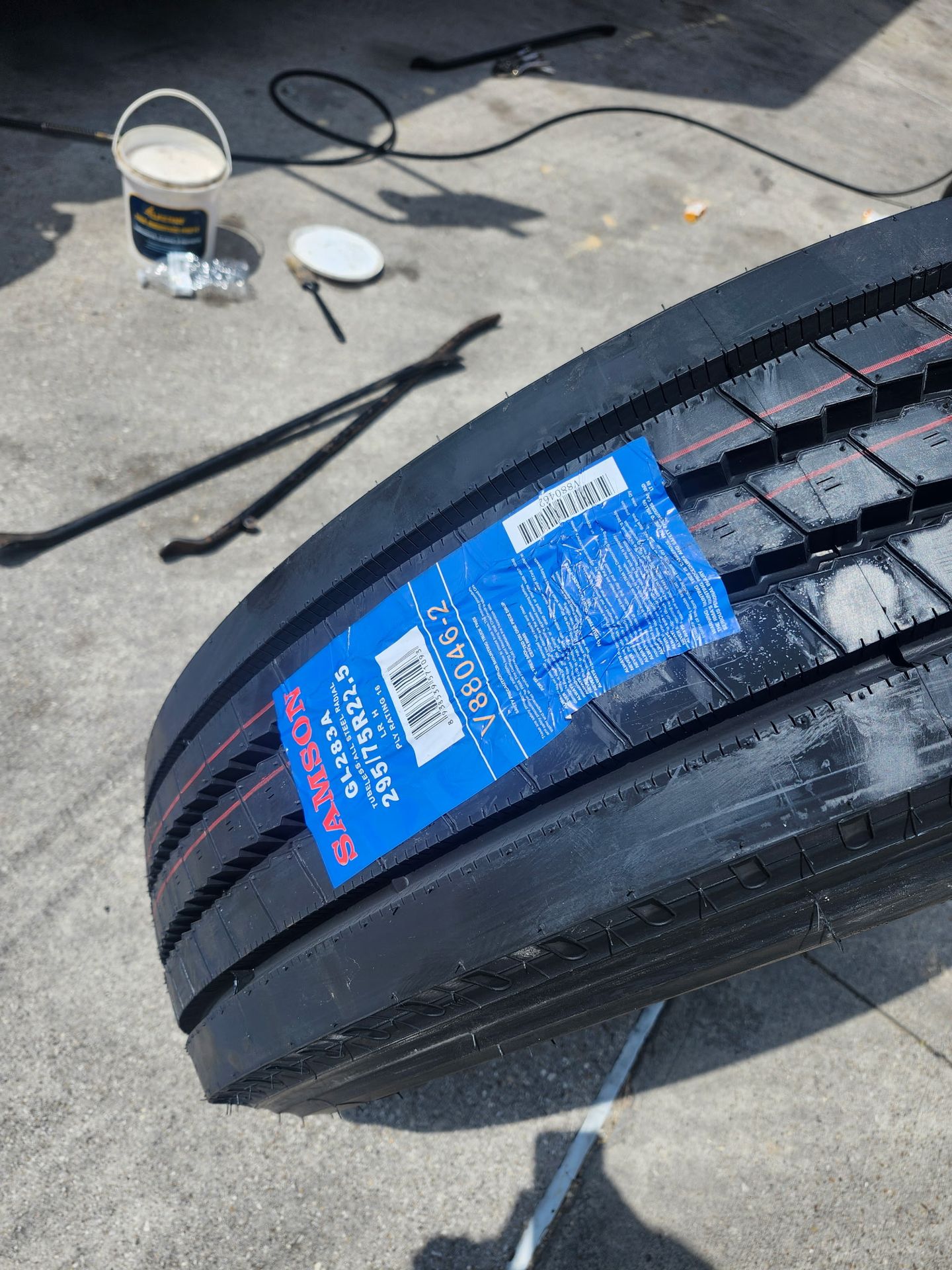
Look at the sidewall of any tire and you'll see a string like 225/45R17 94V. It looks like a secret code, but it's actually a compact spec sheet that tells you everything about the tire's size and ratings. Once you know how to read it, you'll be able to confirm you're buying the right tire, match a replacement, and talk to any tire pro with confidence. Let's decode it piece by piece.
The full breakdown of 225/45R17 94V
| Part | Example | What it means |
|---|---|---|
| Width | 225 | Tire width in millimeters, tread edge to tread edge |
| Aspect ratio | 45 | Sidewall height as a percentage of the width |
| Construction | R | Radial — the standard for modern tires |
| Rim diameter | 17 | Wheel diameter in inches the tire fits |
| Load index | 94 | How much weight the tire can carry |
| Speed rating | V | Maximum safe sustained speed |
1. Width (225)
The first number is the tire's section width in millimeters — the distance across the tread from one sidewall to the other. In our example, the tire is 225 mm wide. A larger number means a wider tire, which generally means more contact with the road. Width has to match your wheel and vehicle; you can't just fit any width you like.
2. Aspect ratio (45)
The second number is the aspect ratio, expressed as a percentage. It tells you how tall the sidewall is relative to the width. A 45 means the sidewall height is 45% of 225 mm. A lower number (like 40) means a shorter, sportier sidewall; a higher number (like 65) means a taller, cushier sidewall. This affects ride comfort and handling.
3. R — radial construction
The letter R stands for radial, describing how the internal cords are laid out. Almost every modern passenger tire is radial, so you'll see R on the vast majority of tires. Occasionally you'll see a D (diagonal/bias) on specialty or trailer tires.
4. Rim diameter (17)
This is the wheel diameter in inches that the tire is built to fit. A 17 means the tire mounts on a 17-inch wheel. This number must match your wheels exactly — a 17-inch tire will not fit an 18-inch wheel.
5. Load index (94)
After the size comes the load index, a number that corresponds to the maximum weight each tire can safely support. Higher numbers carry more weight. It's important to match or exceed your vehicle's original load index, especially on trucks and SUVs that carry heavier loads.
6. Speed rating (V)
The final letter is the speed rating, indicating the maximum sustained speed the tire is designed to handle safely. Common ratings run from S and T through H, V, W, and Y, each corresponding to a higher speed capability. As with load index, you should match or exceed your vehicle's original rating — never go lower.
Rule of thumb: when replacing tires, match the full size and meet or beat the load index and speed rating that came on your vehicle. Mixing very different sizes or lower ratings can affect safety and handling.
Where to find your tire size
You've got three easy places to look:
- The sidewall. The size is printed right on the tire, exactly like our example. Just read it off.
- The driver's door jamb. Open the driver's door and look for a sticker on the frame. It lists the manufacturer's recommended tire size and the recommended tire pressure. This is the most reliable source for what your vehicle was designed to run.
- The owner's manual. The tire specifications are listed in the manual as well.
A quick note: the size on your current tires might not match the factory recommendation if a previous owner changed sizes. When in doubt, the door-jamb sticker is your source of truth.
You don't have to memorize any of this. If you can read us the numbers off your sidewall or door jamb, we can match the exact right tire for your vehicle and bring it to you.
Why the right size matters
Fitting the correct size isn't just about clearance. The wrong size can throw off your speedometer, change how the car handles, rub against suspension components, and even confuse safety systems like traction control. That's why we always confirm the correct fitment before installing a new tire. If you're thinking about intentionally changing sizes for looks or performance, talk to a pro first so you understand the trade-offs.
A few other markings you'll see
Beyond the main size, your sidewall carries a few extra codes worth recognizing. You'll often find M+S (mud and snow) or a mountain-snowflake symbol indicating all-season or winter capability, a DOT code that includes the week and year the tire was manufactured, and a treadwear, traction, and temperature rating from the Uniform Tire Quality Grading system. You may also see maximum load and maximum pressure figures — remember, that max pressure is the tire's limit, not your recommended setting, which lives on the door jamb. None of these change the size you need, but they help you compare tires and gauge age.
Want the full reference?
We keep a complete, printable breakdown on our tire size guide page, including all the markings you'll find on a sidewall. Bookmark it for the next time you're shopping.
The bottom line
That string of numbers on your tire is just width, sidewall height, construction, wheel size, load capacity, and speed rating — nothing more mysterious than that. Now that you can read it, you can shop with confidence and make sure any replacement matches your vehicle. And if you'd rather just hand it off, read us your size and we'll bring the correct tire to your driveway. Call (682) 392-2068.