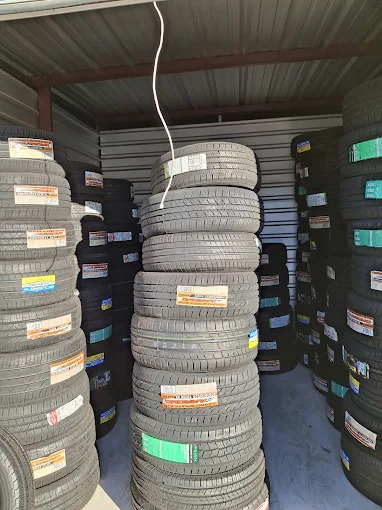
Your RV might have plenty of tread and still be dangerous to drive. RV and motorhome tires carry enormous weight, sit for months between trips, and bake in the North Texas sun — a combination that ages them out long before the tread wears down. If you keep a motorhome in the DFW area or you're passing through on I-35 or I-20, understanding RV tires is one of the most important safety steps you can take. This guide covers load ratings, the six-year rule, pressure, blowout prevention, and how mobile service keeps you off the shoulder.
RV tires carry serious weight: understanding load ratings
A loaded Class A motorhome can weigh 20,000 to 30,000 pounds or more, and every ounce of that rides on the tires. That's why RV tires — whether the LT (light-truck) tires on smaller Class B and C rigs or the commercial-grade tires on big Class A coaches — are chosen by load rating, not just size.
Two numbers matter:
- Load index / load range — how much weight the tire can carry at its rated pressure. Bigger coaches use load range E, F, G, or H tires.
- Max load and max pressure — printed on the sidewall, these define the tire's ceiling, but your actual target pressure depends on how much weight is really on each axle.
The most common mistake is overloading one corner. RVs carry water tanks, batteries, generators, and gear that are rarely balanced side to side. If one tire is carrying more than its share, it runs hotter and fails sooner. When we replace RV tires, we make sure the load range matches the coach and talk through weight distribution. Learn more about our mobile RV tire service.
The 6-year rule: why age beats tread on an RV
Here's the single most important fact for RV owners: RV tires age out before they wear out. Because a motorhome might only cover a few thousand miles a year, the tread can look nearly new at the same time the rubber has quietly hardened and started to crack from the inside. Most RV and tire manufacturers recommend replacing RV tires at six years regardless of tread depth, and at an absolute maximum of ten years.
An RV tire with 80% tread and a seven-year-old date code is not a good tire — it's a blowout waiting for the right hot afternoon on the highway. On a motorhome, age is the number that matters most.
You can find the age on the DOT date code molded into the sidewall — the last four digits are the week and year of manufacture (for example, "2419" means the 24th week of 2019). If you don't know how old your tires are, that's reason enough to have them checked before your next big trip.
How the Texas climate speeds it up
North Texas is hard on tires. Intense UV, triple-digit summer heat, and long storage periods in the sun accelerate the dry-rot and cracking that end an RV tire's life. If your coach sits outdoors at a storage lot most of the year, assume it's aging faster than the calendar suggests, and inspect the sidewalls every spring.
Pressure: the most overlooked safety habit
Correct inflation is the biggest thing you control. An underinflated RV tire flexes more, builds heat, and is far more likely to fail under load at highway speed. But "correct" isn't simply the max PSI on the sidewall — it's the pressure that matches the actual weight on each axle, read from the tire maker's load-and-inflation table.
| Habit | Why it matters |
|---|---|
| Check pressure cold, before driving | Heat inflates a tire; a "correct" hot reading can hide underinflation |
| Set pressure to loaded axle weight | Max sidewall PSI may be too high or too low for your real load |
| Check all tires, including inner duals | A slow leak on an inner dual is easy to miss until it fails |
| Recheck before every long trip | Tires lose pressure over the months a coach sits parked |
For more on how North Texas heat affects inflation, see our guide to correct tire pressure in the Texas heat.
Blowout risk on long trips — and what to do
RV blowouts almost always happen at speed, under load, on a long hot drive — exactly when they're most dangerous. A front-tire blowout on a heavy motorhome can pull the steering hard; the trained response is to hold the wheel firmly, accelerate briefly to maintain control, then ease off gradually and steer to a safe stop, rather than braking hard immediately.
Blown an RV tire on a DFW highway? Get everyone well off the roadway behind the barrier, put out reflective triangles, and call for help — don't attempt to jack a heavy motorhome in a traffic lane. We provide 24/7 roadside assistance and flat tire service and bring the right RV tire and heavy-duty jack to you.
Because we're fully mobile, we come to you whether you're at an RV park, a storage lot, your driveway, or stopped on the shoulder of I-30. There's no need to limp a damaged coach anywhere.
When to replace RV tires
- Age. Six years since manufacture — check the DOT date code — and never more than ten.
- Cracking. Visible dry-rot in the sidewall or tread grooves.
- Uneven or worn tread. Down to the wear bars, or wearing on one edge from alignment or inflation issues.
- After a blowout. Replace the failed tire, and inspect its mate, which took extra load.
- Before a major trip. If you're heading out of the metroplex, inspect and, if in doubt, replace at home.
Not sure how old your tires are or whether they'll make the trip? A quick inspection is honest, free advice — call (682) 392-2068.
On-site RV tire service across DFW
We service Class A, B, and C motorhomes and towable RVs everywhere in the metroplex — from Dallas and Fort Worth to the surrounding suburbs. Browse our full service area list. We come to your home, RV park, or the roadside with the correct tires and the equipment to lift a heavy coach safely. Traveling with a tow vehicle too? We handle tire replacement on your truck or SUV in the same visit.
Frequently asked questions
How old is too old for an RV tire?
Most manufacturers recommend replacing RV tires at six years regardless of tread, and never running them past ten years. RV tires age out from sun and time long before the tread wears out.
Why do RV tires blow out on long trips?
Heavy load, sustained highway speed, underinflation, and age combine to build heat the tire can't shed. Correct pressure for your loaded weight and timely replacement prevent most blowouts.
How do I know the right tire pressure for my RV?
Base it on the actual loaded weight on each axle using the tire maker's inflation table, not just the sidewall max. Weighing the loaded RV is the safest way to set it. We can help you find the target.
Do you service RV tires on-site?
Yes — we're fully mobile and service motorhomes and towables at your home, RV park, storage lot, or roadside anywhere in DFW, 24/7. Call for an exact quote.