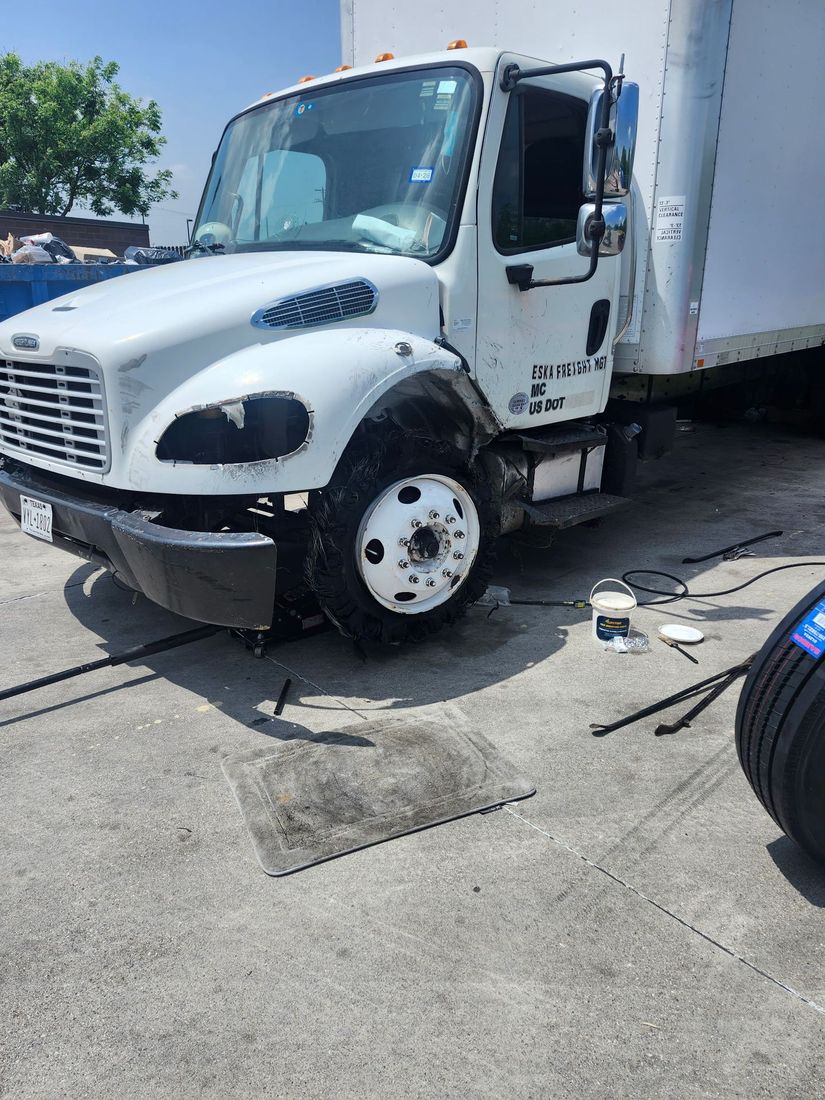
Summer in North Texas is hard on everything, and your tires are no exception. Between triple-digit air temperatures and pavement that gets far hotter than the air, the heat quietly stresses your tires in ways that raise the risk of a blowout. The upside: a little seasonal attention goes a long way. Here's what the Texas heat does to your tires and how to stay ahead of it.
How heat affects tire pressure
Air expands as it heats up, so the pressure inside your tires rises with temperature. As you drive, friction between the tire and hot pavement heats things further, and the pressure climbs even more. That's normal — tire pressure ratings account for some of it — but it becomes a problem when a tire starts the day already in bad shape.
The bigger danger is actually underinflation. An underinflated tire flexes more as it rolls, and that flexing generates heat. On a 100-degree Texas afternoon, a low tire can build up enough heat to fail. This is why checking your pressure regularly in summer is so important — read our full guide on correct tire pressure for Texas roads for exactly how to do it.
Check pressure when tires are cold. Measure in the morning before you drive, or after the car has sat a few hours. A hot tire reads higher than its true cold pressure, so a midday reading can fool you into thinking a low tire is fine.
Why summer is blowout season
Heat is a blowout's best friend. When you combine high temperatures with any of these, the risk climbs:
- Underinflation — the number-one cause of heat-related tire failure.
- Old or cracked rubber — Texas sun accelerates rubber breakdown, and hot rubber is weaker rubber.
- Worn tread or existing damage — a tire already near the end of its life has less margin.
- Heavy loads and long highway runs — road-trip weight plus sustained speed plus heat is a demanding combination.
None of these individually guarantees a blowout, but stacked together on a hot day they're a recipe for trouble. If your tires are showing any warning signs of wear, summer is the worst time to push your luck.
Hot pavement and your tread
Air temperature is only half the story. Asphalt in direct Texas sun can run dramatically hotter than the air, and your tires are pressed against it mile after mile. Hot pavement softens rubber and accelerates tread wear, especially if your tires are already low or your alignment is off. It also makes existing small problems — a slow leak, a nail, a worn spot — worse faster.
Think of a summer road trip as a stress test for your tires. Anything marginal in June becomes a real risk at 75 mph on hot pavement in July.
Before a summer road trip: a quick checklist
Whether you're running up I-35 to Dallas, out 290 toward the North Texas, or down to Arlington, a five-minute check before you leave can save your trip. Before you load up:
- Check pressure in all four tires — and the spare. Set them to the pressure on your door-jamb sticker, measured cold.
- Do the penny test to confirm you have enough tread for wet roads and summer storms.
- Inspect for damage — look for cracks, bulges, embedded nails, or uneven wear.
- Account for your load. A car packed with people and gear may need pressure toward the higher end of the recommended range (check your manual).
- Confirm your spare is usable and you have the tools — or save our number in case you don't.
If anything looks marginal, deal with it before you go. It's far cheaper and less stressful to replace a questionable tire in your driveway than to handle a blowout on the highway shoulder in the heat with the family in the car.
Don't forget the spare
Your spare tire is easy to ignore right up until the moment you desperately need it — and a spare that's flat, dry-rotted, or missing entirely is no help at all. Before summer road-trip season, check that your spare holds air and is in usable condition, and confirm you actually have the jack and lug wrench to use it. Many newer vehicles ship with only a sealant kit or a compact temporary spare that's limited to low speeds and short distances. Knowing what you've got before a blowout means no nasty surprises on the shoulder in the heat.
What to do if a tire fails on the road
If you do suffer a blowout or find a tire going down on a Texas highway, ease off the gas, keep the wheel steady, and work your way to the widest, safest spot off the road you can reach. Get everyone away from traffic. Then call for help. Our emergency and roadside tire service runs 24/7, so a summer breakdown at any hour gets a real response. We'll come to your location with the tire and tools to get you moving again — no tow to a shop required.
Save the number before the trip: (682) 392-2068. Being stranded in the Texas heat is a lot less stressful when help is one call away.
The bottom line
Texas summer heat raises tire pressure, punishes worn and underinflated tires, and turns small problems into blowouts. Keep your pressure correct, watch for wear, and run a quick check before every road trip. Do that and your tires will handle the heat just fine. And if the worst happens, we're a phone call away, day or night. Call (682) 392-2068.